Dionysian Echoes in the Aegean: The Zeybeks of Anatolia and the Maenads of Pelion
Codex Markings▾
Introduction
Throughout the Aegean world, ancient religious traditions have often survived in unexpected forms, preserved not through formal theology but through dance, music, ritual, and collective memory. Among the most intriguing examples is the possible relationship between the Zeybek tradition of western Anatolia and the ecstatic Dionysian cults of ancient Greece, particularly those associated with the Maenads of Mount Pelion in Thessaly. While separated by centuries and transformed by changing political and religious landscapes, both traditions reveal striking parallels in symbolism, movement, and social function.
This article explores the hypothesis that the Zeybek dance and ethos may preserve elements of older Dionysian ritual patterns that once flourished across the Aegean basin.
Dionysus and the Mountains of Thessaly
In Greek mythology and religious practice, Dionysus was the god of wine, ecstasy, transformation, and liberation. Unlike the Olympian deities associated with civic order, Dionysus occupied liminal spaces: mountains, forests, caves, and wilderness. His followers, known as Maenads or Bacchae, participated in nocturnal rites characterized by ecstatic dancing, rhythmic music, and altered states of consciousness.
Among the regions strongly connected to Dionysian worship was Thessaly. Mount Pelion, rising above the Pagasetic Gulf, was regarded as a sacred landscape where mythological beings, including centaurs and nymphs, dwelled. Ancient literary sources describe women leaving their villages to ascend the mountains, where they danced in honor of Dionysus. These rituals dissolved ordinary social hierarchies and created temporary communities united by music, movement, and spiritual ecstasy.
The Maenads embodied a paradoxical combination of wildness and sacred order. Their dances were not random acts of frenzy but structured expressions of religious experience, linking human participants to natural cycles and divine power.
The Zeybeks of Western Anatolia
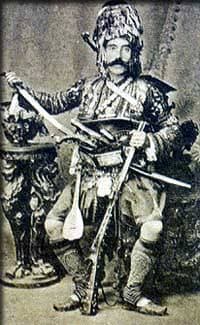
The Zeybeks emerged historically in western Anatolia between the seventeenth and nineteenth centuries as independent warrior bands operating in the mountainous regions of Caria, Lydia, and the Meander Valley. They became renowned for their autonomy, courage, and adherence to codes of honor. Their distinctive dance, known as the Zeybek, remains one of the most recognizable folk traditions of the eastern Aegean.
The dance is characterized by slow, deliberate movements, outstretched arms resembling the wings of an eagle, sudden turns, kneeling gestures, and a strong emphasis on individual expression. Traditionally performed by a single dancer or small group, the Zeybek presents a figure who stands apart from ordinary society—a solitary hero, both noble and untamed.
The geography of the Zeybeks is significant. Like the followers of Dionysus, they were associated with mountain landscapes, forested refuges, and regions beyond direct state control. Their identity was shaped by a close relationship with nature and a resistance to centralized authority.
Animal Symbolism
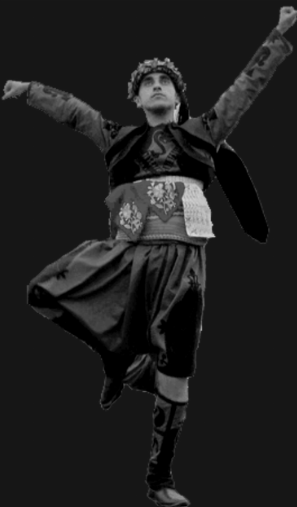 The eagle posture common in Zeybek dance may preserve echoes of much older Mediterranean traditions linking human ritual movement to animal symbolism. Ancient Dionysian imagery frequently incorporated transformations between human and animal forms, reflecting the god's power over boundaries and identities.
Khizr (Hızır)
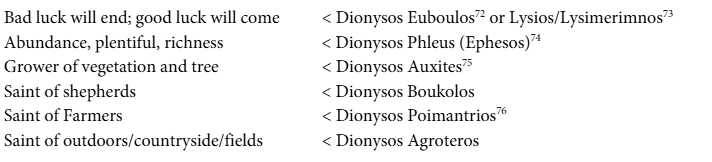
As stated above Khizr is an Islamic continuation of St. George (Hagios Georgios) and has a special place in Zeybek culture. It is believed that Khızr sleeps near the laurel tree, under which the initiation rituals took place. It is also believed that the amulets protecting Zeybeks against death were provided by Khızr. Zeybeks further consider Khıdrellez and the saint's day on the 5/6th of May sacred. Khızr will often be called Bozatlı (a man with/on a grey horse).
There are many phrases still in use in Turkish related to Khızr: Let Khızr help you with his grey horse, let him keep an eye on you, let him guard you from evil, let him reach you as soon as possible to save you from trouble. The most common phrase is: to come in time as Khizr (as a godsend), to rescue like Khizr at the right time.
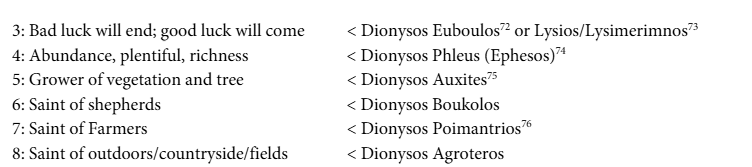
The cult of Khizr transmitted a series of greek-thracian-anatolian /Dionysiac perceptions to the Zeybek culture. Below is a preliminary comparative list of wishes said to be realized by Khizr and their possible origins in the ancient perceptions of Dionysos which are tangible in his epithets: Khizr / Dionysos.
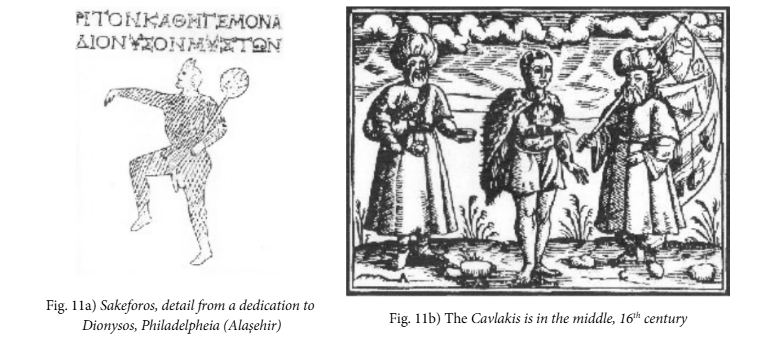
Pelion, Thessaly, and the Connection to Eastern Aegean
The Aegean Sea has never been a barrier; it has historically functioned as a corridor connecting peoples, beliefs, and cultural practices. Throughout antiquity, Thessaly maintained maritime and cultural links with the islands and coasts of the eastern Aegean. Migrations, trade networks, military movements, and religious exchanges created conditions through which ritual motifs could travel and evolve.
The ancient regions of western Anatolia were heavily influenced by Greek, Anatolian, and later Greco-roman traditions. Dionysian cults flourished throughout these territories for centuries. It is therefore plausible that massive remnant of Dionysian symbolism survived long after the disappearance of formal hellenistic worship, becoming embedded within local customs, dances, and social identities.
Such survivals would not represent direct preservation but cultural transformation. Ritual forms often outlive their original meanings, acquiring new interpretations while retaining older structures beneath the surface.
From Maenads to Folk Tradition
Many scholars of folklore have noted that pre-Christian and pre-Islamic ritual elements frequently survive within regional festivals and dances. Across the Balkans and Anatolia, seasonal celebrations, circle dances, masquerades, and mountain gatherings preserve patterns whose origins may reach back to antiquity.
The Zeybek tradition can be viewed within this broader framework. Rather than being a direct descendant of Dionysian worship, it may represent one branch of a much larger continuum of Aegean ritual culture—a continuum in which sacred dance, mountain symbolism, heroic identity, and communal performance remained central themes.
The Zeybeks as a Ritual Brotherhood
According to Meriç, the Zeybeks should not be understood merely as nineteenth-century mountain rebels. Their social organization, initiation rituals, hierarchy, costume, dance, and symbolic behavior preserve elements that resemble much older ritual traditions of western Anatolia. He argues that the Zeybek tradition developed in the same Aegean landscapes where the cults of Dionysus and the Pyrrhic warrior dance flourished in antiquity.
The Zeybek community was highly structured. At its center stood the Efe, the respected leader, followed by younger initiates known as Kızans. Entry into the group involved rites of acceptance, loyalty, and personal transformation. Meriç sees these initiation practices as comparable to ancient male warrior and mystery traditions that transformed ordinary youths into members of a sacred brotherhood.
Mountains and Sacred Geography
One of the strongest parallels with Dionysian tradition is the importance of mountains. Historically, Zeybeks lived and operated in the mountainous regions of Caria, Lydia, and the Meander basin. Ancient Dionysian cults likewise preferred mountains, forests, and remote sanctuaries away from urban centers. Meriç argues that this is more than coincidence; both traditions were expressions of a cultural worldview in which freedom, initiation, and spiritual transformation occurred outside ordinary society.
The mountain was simultaneously a refuge, a training ground, and a sacred space. The Zeybek's separation from settled society resembles the symbolic withdrawal of Dionysian devotees into the wilderness.
The Dance as a Survival of Ancient Ritual
Meriç places particular emphasis on the dance itself. The slow, majestic movements of the Zeybek, the spreading of the arms, the circular turns, and the dramatic pauses are interpreted as survivals of very old ritual choreography. He compares aspects of the dance to both Dionysian ecstatic performances and the ancient Pyrrhic war dance.
Unlike many folk dances that emphasize collective synchronization, the Zeybek dancer often stands alone. The dancer occupies the center of attention and performs a symbolic role rather than merely entertaining spectators. In Meriç's interpretation, the dancer embodies the heroic initiate, a figure positioned between the human and the sacred.
Costume and Symbolism
The distinctive Zeybek costume also receives attention. The elaborate embroidery, weaponry, ornaments, and hierarchical insignia identify status within the group. Meriç argues that these visual elements functioned much like ceremonial costumes in older ritual systems. They transformed the wearer into a symbolic character and communicated membership in a special social order.
The costume was not simply practical clothing for outlaws; it was a visual statement of honor, courage, and sacred identity. The Zeybek's appearance projected the image of a heroic warrior standing outside ordinary social boundaries.
From Dionysus to Anatolian Folk Culture
Perhaps the most interesting argument in the article is that the Dionysian tradition did not disappear but was gradually transformed. Meriç proposes that ancient Dionysian and Pyrrhic elements passed through Byzantine, Christian, and later Islamic cultural layers. Along the way they absorbed influences from the cult of Saint George, the traditions of Khidr (Hızır), and Anatolian dervish movements. The result was a uniquely Anatolian synthesis that eventually became known as Zeybek culture.
In this view, the Zeybeks are not only descendants of ancient Greeks or of a single ethnic group. Rather, they are the heirs of a long Aegean cultural tradition that survived through adaptation and reinterpretation across centuries.
Titles Given to Al Khizr by Zeybeks and Their Parellel to Dionysus
Conclusion
The connection between the Zeybeks of western Anatolia and the Maenads of Mount Pelion can be proven through direct folkloral evidence. Nevertheless, the similarities between these traditions illuminate enduring cultural patterns that have shaped the Aegean world for millennia. Both traditions celebrate freedom, transformation, and the power of dance to bridge the human and the sacred. Whether viewed as historical survivals, symbolic parallels, or expressions of a shared Mediterranean heritage, the Zeybeks and the Maenads reveal the remarkable persistence of ancient cultural archetypes. Beneath the movements of the modern Zeybek dancer may still resonate distant echoes of the mountains, music, and ecstatic rituals once dedicated to Dionysus.
References
Source: Prof. Dr. Recep Meriç, "Dionysiac and Pyrrhic Roots and Survivals in the Zeybek Dance, Music, Costume and Rituals," Gephyra 14, 2017, 213–239. Department of Tourism Management, Yaşar University, Selçuk Yaşar Campus, İzmir, Turkey (recep.meric@yasar.edu.tr). The proof reading of this article was kindly undertaken by John Thompson of the School of Foreign Languages at Yaşar University.
Notes
1 See Lemma 'Zeimbekikos' in: Enkyklopaideia tou Ellenikou Khorou, E-F198 C (in internet); Th. and E. Petrides 1961, 65-78: in relation to the zeybekikos and turkikos dances practiced in the Dodecanese. 2 Stehle 2000, 1-6; Slater 1990, 218-220. 3 Uyanık – Özçelik 2014, 3. 4 Yağbasan 2010, 367-388. 5 H. Balıkçısı 1989, 164. 6 Cic. de nat. III, 58 (Trans. by Rackham). 7 Suidas s.v. Dionysus, Sabazius. 8 But the exact meaning of the root of Bacchus is to date not clearly explained. –bek may somehow be compared with Persian benghh or Indian bangha both meaning Indian hemp or cannabis. On the other hand, bak is a local word used in the region of Lapseki (Lampsacus) meaning the same as Indian hemp. May if be that the meaning of Bacchus be explained as ecstasy, frenzy as drunkenness similar to the feeling, if one consumes cannabis or wine or achieves this state through ecstatic dancing, shouting and running into the mountains. 9 Avcı 2012, 53-67; H. Balıkçısı 1989, 164; Gazimihal 1999, Vol. 3, 219-220. 10 Öztürk 2010, 33-34. 11 Öztürk 2010, 33-34 12 Merkelbach 1988, 1-4, 15-17. 13 Athenaeus XIV, p631A. 14 Wheeler 1982, 223-233. 15 Lonsdale 2000, 29. 16 Merkelbach 1988, 50. 17 See below pp. 224-225. 18 Avcı 2012, 572; Mirzaoğlu 2004, 7-8: "…bengi is a mass dance in circle; zeybek is regularly a solo dance performed by Efe or a mass dance in a circle performed by zeybeks and kızans". 19 Merkelbach 1988, 50; J.- L. Robert 1981, 448; A Dictionary of Greek and Roman Antiquities (1890) sv pyrrhica. 20 Friedlaender 2013, 108. 21 Kessler 2006 (abstract). 22 Rautman 2006, 114-115; Kaldellis 2012, 192-194 23 Lane 1980, 9-33; Lane 1983, 100. 3, Conclusions. 24 Hamilton 1986, 247. 25 Ocak 1991, 662. 26 Encyclopedia of İslam Harper and Row 1989, 224-225. 27 Ocak 1991, 671-672. 28 Ocak 1992, 60-61, Ocak 2013, 4, 149-15. 29 Merkelbach 1988, 49, 51, 57-58. 30 See above p. 215, for Brumalia see below pp. 223-223 31 Ocak 1990, 138-139; 1991, 670-672; Rumeli: Melikoff 1993, 43; Hasluck 1929; for a recent survey of the coexistence of St. George in a Khizr cult in Hatay (Antakya, Seleucid Antioch) see Türk 2010, no. 85, 138-146. 32 See here pp. 214, 216, 218, 224, 226. 33 Ocak 2013, 227. 34 Ocak 1999, 85. 35 Ocak 1999, 226. 36 See in Ocak 2013, (4), 214-215 esp. n. 125. 37 See here pp. 216, 221, 222, 224, 227. 38 Alkan 2009, 249; Ocak 1999, 207. 42 Avcı 2012, 117. Avcı is to date the main author mentioning 'to laugh' as a living ideal. It is referred to by other authors usually as 'to die', which might have been used after the severe prohibitions against Zeybeks in 19th cent., which possibly led to a deception. However, laughing as a living ideal does not easily agree with a heroic and warlike Zeybek! 43 Altıntuğ 2013, (6/1), 139-140. 44 Heinemann in Schlesier 2011, 391-413 'Ein dekorativer Gott, Bilder für Dionysus zwischen griechischer Votivpraxis und römischem Decorum' 5 Friedlaender 2013, 108-109. 46 J. - L. Robert 1981, 362-485 (448); Slater 1990, 218-219. 47 Avcı 2012, 533-550. 48 Friedlaender 2013,108. 49 Karademir 2013, 55-56. 50 Karademir 2013, 56. 51 Kutlu 2013, 52 Fig. 5. 52 Avcı 2012, 114-115 53 Avcı 2012, 565. 54 Merkelbach 1988, 26. 55 Aydın İl Kültür Tur. Md. Halk Dansları http://www.aydinkulturturizm.gov.tr/TR,/halk-danslari.html Page 1 of 3. 56 Ocak 1999, 159. 57 Öztürk 2010, 177–178 n. 70, 71; Merkelbach 1988, 20; Ocak 1999, 159. 58 Öztürk 2010, 120, 177. 59 Çetin 2006, 198-202, see especially And 1962; Karadağ 1978. 60 Suidas sv Melanaigis Dionysus. 61 Eph Rept 1267; Öztürk 2010, n. 72. 20 62 Hunger 1978, 110. 63 Avcı 2012, 121-124; Messadié 1998, 208. Luschan 1891, 34. 64 Avcı 2012, 117, 124, 577. 65 Ocak 1999, 212 n. 65. 66 Ocak 2013, 383-387. 67 See here pp. 216, 217, 226. 68 Avcı 2012, 91, 115, 130-131, n. 147-148, 292, 527, 531, n. 507. 69 Türk 2010, 143; Ocak 2013 s. 227; Avcı 2012, 529-531. 70 Santoro 1974, 300. 71 Athenaios II 2, 36b; cf. Gruppe 1906, 1432 n. 3. 72 Gruppe 1906, 1544 n. 1. 73 Gruppe 1906, 1432 n. 3. 74 Santoro 1974, 296 f. 75 Pausanias VIII 26, 1 (cf. Gruppe 1906, 1414 no. 3). 76 IvEph no. 902. 77 Merkelbach 1988, 1, 3, 10. 78 See a recent summary in Öztürk 2010, 89 n. 73. 79 Trombley 1985, 338 n. 63; for Turkish sacrifice kurban survived and attested as late as 1570 in the ancient Hellenic manner see Trombley 1985, 339 n. 73. 80 Plato Laws, 815 c. 81 Slater 1990, 220. n 38; Maas 2005, 64-66; Cameron 1997, 98.
Bibliography
- Alkan 2009 — M. Alkan, Yeniçeriler ve Bektaşilik, Türk Kültürü ve Hacı Bektaşi Veli Araştırma Dergisi 50, 2009, 243-260.
- Altıntuğ 2013 — M. Altıntuğ, Examination by semiotical approach of Yells (Nara) that are the products of dancer and dance interactions in Turkish Folk Dance, Uşak Üniversitesi Sosyal Bilimler Dergisi 12, 6/1, 2013, 131-148.
- And 1962 — M. And, Dionysos ve Anadolu Köylüsü, İstanbul 1962.
- Aucher-Éloy 1843 — P. M. R. Aucher-Éloy, Relations de voyages en Orient, de 1830 à 1838 par Aucher-Eloy, revues et annotées par M. le Comte Jaubert, 2 vols, Paris 1843.
- Avcı 2012 — A. H. Avcı, Zeybeklik ve Zeybekler Tarihi, Ankara 2012.
- H. Balıkçısı 1989 — Halikarnas Balıkçısı, Hey Koca Yurt, Ankara 1989.
- Cameron 1997 — A. Cameron, Cult and Worship in East and West, in: L. Webster – M. Brown (eds.), Transformation of the Roman World AD 400-900, London 1997, 96-111.
- Ceccarelli 1998 — P. Ceccarelli, La pirrica nell'antichita greco romana: Studi sulla danza armata, Pisa/Rome 1998.
- Çetin 2006 — C. Çetin, Anadolu'da Bereket Kültü ve Anadolu Türk Köylüsü Seyirlik Oyunlarına Yansımaları, Ankara Üniversitesi DTCF Dergisi 46/1, 2006, 189-210.
- Friedlaender 2013 — L. Friedlaender, Roman Life and Manners Under the Early Empire (Vol. 2), London 2013 (Original Print: 1913).
- Gazimihal 1999 — M. R. Gazimihal, Türk Halk Oyunları Kataloğu, Vol. 3, (Publication of Ministry of Culture), Ankara 1999, 219-220.
- Gruppe 1906 — O. Gruppe, Griechische Mythologie und Religionsgeschichte, München 1906.
- Hamilton 1986 — W. Hamilton, Ammianus Marcellinus: The Later Roman Empire AD 354-378, London 1986.
- Hasluck 1929 — F. W. Hasluck, Christianity and Islam under the Sultans, 2 vols, Oxford 1929.
- Hunger 1978 — H. Hunger, Lexikon der griechischen und römischen Mythologie: Mit Hinweisen auf das Fortwirken antiker Stoffe und Motive in der bildenden Kunst, Literatur und Musik des Abendlandes bis zur Gegenwart, Vienna 1978.
- Kaldellis 2012 — A. Kaldellis, The Kalends in Byzantium, 400-1200 AD: A New Interpretation, Archiv für Religionsgeschichte 13, 2012, 187-203.
- Karademir 2013 — A. Karademir, İğne iplikle açan çiçekler, in: Egeden Dergisi (Journal), Publication of Ege University Year 5/No 15, 2013, 54-57.
- Koca 2009 — E. Koca, Açıklamalı Zeybek Bibliyografyası ("Annotated Zeybek Bibliography"; Master Thesis, Afyon Kocatepe University), Afyon 2009.
- Kutlu 2013 — A. Kutlu, Kadınların sessiz sözü. Oyalar ve onlara yansıyan şiddet, in: Egeden, Publication of Ege University Year 5/No 15, 2013, 50-53.
- Lane 1980 — E. N. Lane, Towards a Definition of the Iconography of Sabazius, Numen 27/1, 1980, 9-33.
- Lane 1983 — E. N. Lane, Corpus Cultus Iovis Sabazii II: The Other Monuments and Literary Evidence, Leiden 1983.
- Lonsdale 1993 — H. Steven, Dance and Ritual Play in Greek Religion, Baltimore/London 1993.
- Lonsdale 2000 — S. H. Lonsdale, Dance and Ritual Play in Greek, Baltimore-MD 2000.
- Luschan 1891 — F. von Luschan, Die Tachtadschy und andere Überreste der alten Bevölkerung Lykiens (Zeitschrift Archiv für Anthropologie 19), Braunschweig 1891.
- Maas 2005 — M. Maas, John Lydus and the Roman Past: Antiquarianism and Politics in the Age of Justinian, London/New York 2005 (e-book edition).
- Melikoff 1993 — I. Melikoff, Uyur İdik Uyardılar: Alevilik-Bektaşilik Araştırmaları, İstanbul 1993.
- Merkelbach 1988 — R. Merkelbach, Die Hirten des Dionysos: Die Dionysos-Mysterien der Römischen Kaiserzeit und der Bukolische Roman des Longus, Berlin 1988.
- Messadié 1998 — G. Messadié, Şeytanın Genel Tarihi, Istanbul 1998.
- Miles 2012 — D. Miles, Mask and Performance in Greek Tragedy: From Ancient Festival to Modern Experimentation, Cambridge 2012.
- Mirzaoğlu 2004 — F. G. Mirzaoğlu, Bir Kahramanlık Dansı: Balıkesir Bengisi, Türkbilig 7, 2004, 101-108.
- Mirzaoğlu 2014 — G. Mirzaoğlu, Efe, Zeybek, Kızan in the Context of Zeybekhood Tradition, Acta Turcica VI/2, 2014 (Online article, 32 pages).
- Nasturel 1984 — P. Ş. Nasturel, Recherches sur le testament de Maxime de Skoteine (1247) in : Philadelphia et autre Études, 1984, 4, 69-100.
- Ocak 1990 — A. Y. Ocak, İslam-Türk İnançlarında Hızır Yahut Hızır-İlyas Kültü, Ankara 1990.
- Ocak 1991 — A. Y. Ocak, XIII.-XV. Yüzyıllarda Anadolu'da Türk-Hıristiyan Dini Etkileşimler ve Aya Yorgi (Saint Georges) Kültü, Belleten 214, 1991, 661-673.
- Ocak 1992 — A. Y. Ocak, Osmanlı İmparatorluğu'nda Marjinal Sufilik: Kalenderiler (XIV.-XVII. Yüzyıllar), Ankara 1992.
- Ocak 1999 — A. Y. Ocak, Osmanlı İmparatorluğunda Marjinal Sufilik. Kalenderiler (XIV-XVII. Yüzyıllar), Ankara 1999.
- Ocak 2009 — A. Y. Ocak, Alevi Bektaşi İnançlarının İslam Öncesi Temelleri, İstanbul 2009.
- Ocak 2013 — A. Y. Ocak, Osmanlı Toplumunda Zındıklar ve Mülhidler. 15 ve 17. Yüzyıllar, İstanbul 2013.
- Öztürk 2010 — B. Öztürk, Roma İmparatorluk Çağı Küçükasyası'nda Dionysos Kültü, İstanbul 2010.
- Petrides – Petrides 1961 — T. Petrides – E. Petrides, Folk Dances of the Greeks, New York 1961.
- J. – L. Robert 1981 — J. Robert – L. Robert, Bulletin épigraphique. In: Revue des Etudes Grecques, tome 94, fascicule 447-449, Juillet – décembre 1981, pp. 362-485.
- Rautman 2006 — M. Rautman, Daily life in the Byzantine Empire, Santa Barbara, CA 2006.
- Roller 2012 — L. E. Roller, Sabazios, in: The Encyclopaedia of Ancient History, 2012 (online publication by Wiley Online Library).
- Santoro 1974 — M. Santoro, Epitheta deorum in Asia Graeca cultorum ex auctoribus Graecis et Latinis, Milano 1974.
- Schlesier 2011 — R. Schlesier (ed.), A Different God? Dionysos and Ancient Polytheism, Berlin/Boston 2011.
- Slater 1990 — W. J. Slater, Orchestopala, ZPE 84, 1990, 215-220.
- Stehle 2000 — E. Stehle, Review of: Paola Ceccarelli, La pirrica nell'antichità greco romana: Studi sulla danza armata. Pisa/Rome 1998, Bryn Mawr Classical Review, 03.17, 2000, 1-6.
- Texier 1849 — C. Texier, Description de l'Asie Mineure: faite par ordre du gouvernement français en 1833-1837; beaux-arts, monuments historiques, plans et topographie des cités antiques (vol. 2), Paris 1849.
- Trombley 1985 — F. R. Trombley, Paganism in the Greek World. The case of rural Anatolia, Harvard Theological Review 78, 1985, 334-351.
- Türk 2010 — H. Türk, Hatay'da Müslüman-Hıristiyan Etkileşimi: St. Georges yada Hızır Kültü, Milli Folklor Dergisi 85, 2010, 138-146.
- Uyanık – Özçelik 2014 — E. Uyanık – A. Özçelik, Amnesty for Zeybeks, Acta Turcica 6/2, 2014, 1-26.
- Von Luschan 1891 — F. von Luschan, Die Tachtadschy und andere Überreste der alten Bevölkerung Lykiens: mit fünf Abbildungen und einer Curventafel, Archiv für Anthropologie 19, 1891, 31-53.
- Webb 2009 — R. Webb, Demons and Dancers in Late Antiquity, Cambridge (Ma.) 2009.
- Wheeler 1982 — E. L. Wheeler, Hoplomachia and Greek Dances in Arms, GRBS 23, 1982, 223-233.
- Yağbasan 2010 — M. Yağbasan, The evaluation of the joint vocabulary in Turkish and Greek in point of the cross-cultural interaction, Fırat Üniversitesi Sosyal Bilimler Enst. Dergisi 20/1, 2010, 367-388.
On the Maides of Pelion (Greek sources)
- Δ. Κυρτσώνης (1889): Η παλαιότερη γνωστή γραπτή καταγραφή του εθίμου, που δημοσιεύτηκε στο περιοδικό Εβδομάς και αφορούσε την τέλεσή του στη Δράκεια Πηλίου.
- Ζωσιμάς Εσφιγμενίτης (1898): Στο περιοδικό Προμηθεύς, ο λόγιος από το Πήλιο περιγράφει αναλυτικά τη δομή και τους χαρακτήρες του εθίμου όπως γινόταν στο χωριό του, τον Άγιο Λαυρέντιο.
- A.J.B. Wace (1910): Ο Άγγλος αρχαιολόγος Alan Wace παρακολούθησε το έθιμο την 1η Μαΐου 1910 στις πλαγιές του Πηλίου και δημοσίευσε δύο σημαντικά άρθρα, συνδέοντας άμεσα τους Μάηδες με κατάλοιπα της αρχαίας διονυσιακής λατρείας.
- Σ. Βάμβακος (1929): Περιλαμβάνει πολύτιμες αναφορές για το δρώμενο στο βιβλίο του Ιστορία του Αγίου Λαυρεντίου.
Sign in to leave a mark.
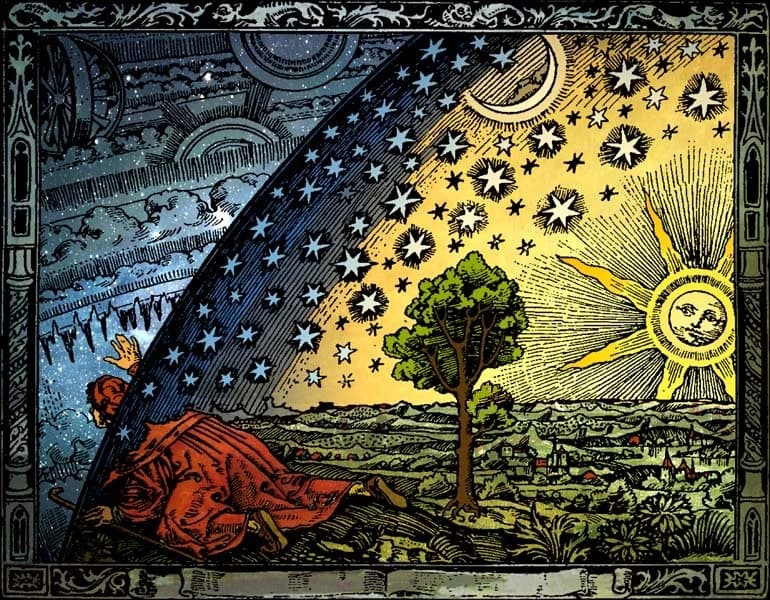
The Esoteric Teachings of the Planet Isis
Isis is the co-ruler of the sign of Taurus and exalted in Libra; Pluto remains unaffected by this and is the co-ruler of the sign of Aries and exalted in Scorpio. Consequently, there is a great deal of confusion circulating regarding these two axes of rulership, leading to significant misinterpretations in practical astrology.
The Journey of the Soul
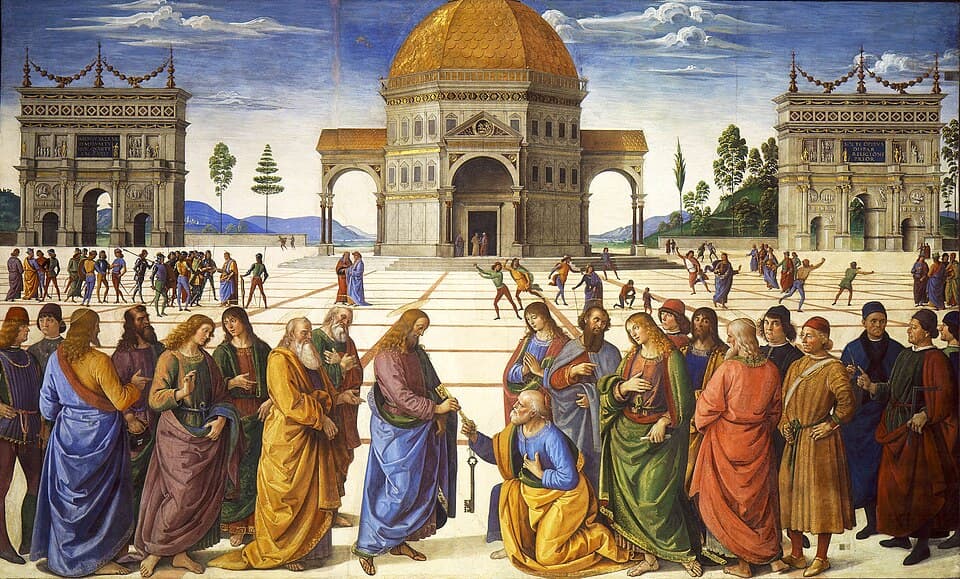
It should be common knowledge that, in traditional esoteric cosmology, the soul does not simply appear in the world, but rather makes its way down from the Light into matter. Along this path, it must take on the negative qualities of the seven guides in its impending incarnation and cross so-called thresholds, gates guarded by their keepers. This obstacle also exists on the path back to Kether, to the light from which it once fled.
As Above, so Below: The Mirrored Principle of the Tree of Life
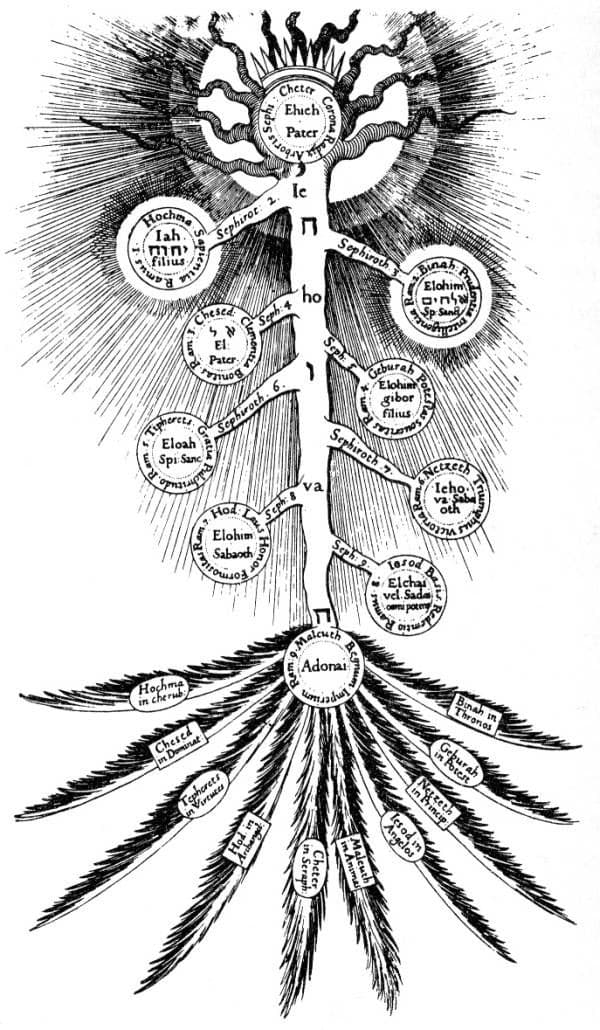
The “Tree of Life” is a visual representation of a cosmic order that serves as a symbol of the connection between Heaven (Macrocosm), Earth (Microcosm) and the Underworld (Prima Materia), as well as of immortality and the awe-inspiring nature of the universe. The question that now remains open, and which is open to many different interpretations, is following: “Why does the divine descent from Kether to Malkuth; from the human perspective, becomes an ascent from grotesque matter to subtle spirit?”